|
_________________________________________________________
UPCOMING EVENTS:
15th ANNUAL ANTIQUES & COLLECTIBLES SHOW & SALE
March 5th - 3:00 p.m. - 9:00 p.m.
March 6th - 10:00 a.m. - 4:00 p.m.
Vernon Rec Centre Auditorium and Dogwood Gym (3310 - 37th Avenue, Vernon)
Adult General Admission - $3.00 at the door
ALSO AT THE SHOW! The museum's archives will be holding its first annual USED BOOK SALE!
_________________________________________________________
TEMPORARY EXHIBITS FOR 2010:
"50 YEARS OF BEAUTIFUL MUSIC"
OCTOBER 2009 to JUNE 2010
Plans for this exhibit came in the summer of 2009 when representatives from the Okanagan Symphony approached the museum to assist them in celebrating their 50th anniversary. With help from symphony members who have agreed to supply musical instruments, photographs, and other material a small exhibition will be assembled in time for the start of the symphony’s 2009/10 season.

__________________________________________________________________________________________________________________________
“HALF A CENTURY OF CARNIVAL FUN"
JANUARY 2010 to DECEMBER 2010
This exhibit will celebrate the 50th anniversary of Vernon’s Winter Carnival. The exhibit will open in time for Carnival Week that takes place each year in Vernon during February. The first Winter Carnival was held on Long Lake (Kalamalka Lake) February 23, 1893. It was reported to be the first affair of its kind in the province to be held on ice. However, it was a one-time event and the theme wasn’t repeated until 1944. In March of 1960 over 50 organizations and businesses held a large meeting to discuss the idea of hosting an annual winter carnival. Those attending gave their full support with the first of the city’s ongoing annual carnivals taking place the following year.
-
________________________________________________________________________________________________________________________
“THE COLDER SIDE OF THE SPORTING LIFE"
FEBRUARY 2010 to DECEMBER 2010
This exhibit will celebrate 100 years of winter sporting activities in the North Okanagan. Coupled to the theme of the 2010 Winter Olympics and sports, this exhibit will encompass the history of organized and unorganized winter sports that have taken place in the region for the past century. Downhill and cross-country skiing, curling, ice-skating, hockey, and other activities will all be showcased with artifacts, photographs, and text. This exhibit will complement the Vernon Winter Carnival display and will open at the same time.

_________________________________________________________________________________________________________________________
STATIC EXHIBITS
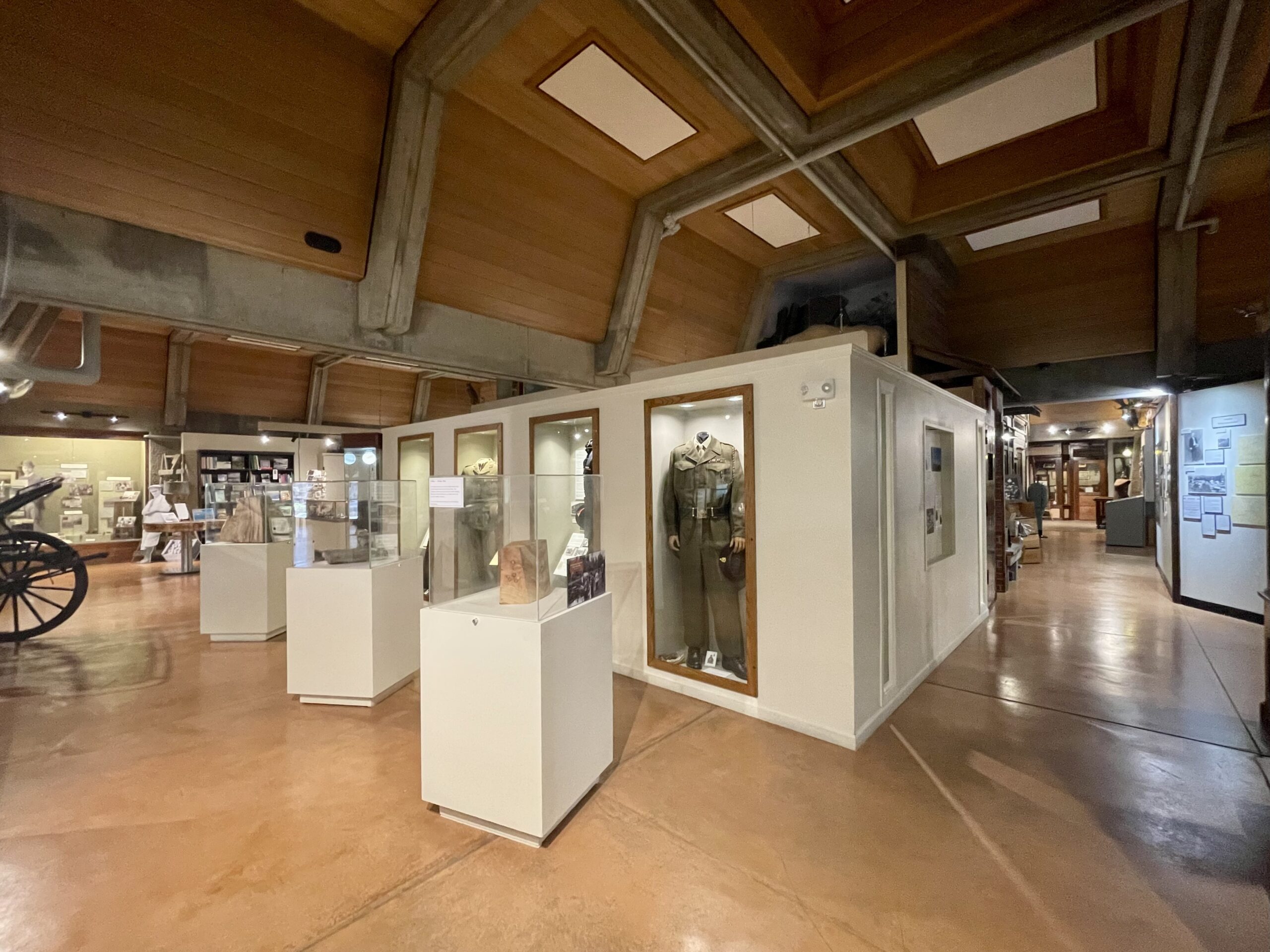
Ten permanent exhibition areas at the Vernon Museum guide visitors through the human and natural history of the North Okanagan and the Vernon area through a series of chronological displays. They consist of:
Interior Salish Displays: A floor-to-ceiling diorama of a lakeshore acts as a backdrop for an authentic 18-foot dugout canoe and introduces the visitor to a very early time period and the Interior Salish. Each of the four display cases in this area has multiple pullout drawers that allow visitors to see additional artifacts and comparative collections. These displays form an integral part of school programming activities.
  
White Settlement: The fur trade, gold mining, and cattle ranching eras are outlined through artifacts, photographs and text in a series of three large display cases.
 
Metamorphosis of Vernon: A wood plank sidewalk leads into large exhibits portraying the transformation of the settlement of Vernon from a sleepy cow town to a bustling transportation centre by the end of the 19th century. This area also has a small operating steam engine. The engine operates under compressed air and is fired-up for school tours and group demonstrations.

A Spate of Building: Vernon’s boom years took place from the late 19th century and into the early 20th century. It was a time when grand hotels, magnificent houses, and elaborate retail establishments were being built. This period in Vernon’s history is portrayed through extensive text, black & white photos, copies of original building plans, architectural artifacts, early tools, and furniture.

Growing the Big Apple: Agriculture is the theme of this display area with the history of the fruit industry in the North Okanagan the primary focus. A near full-scale loading dock, complete with original wood siding, windows, etc. depicts the exterior of a typical early fruit-packing house.
Main Street: An entire corner of the museum is dedicated to six turn-of-the-century scaled down shop fronts and interiors from Vernon's main street (general store, photographic shop, operating print shop, drug store, radio repair shop, and taxidermist). The print shop is operated regularly for school and group demonstrations.

Anyone's House: Another corner of the museum is set aside for our single largest static exhibit. Constructed to look like a typical turn-of-the-century house from the Okanagan, this two-roomed exhibit allows the museum to present aspects of Okanagan social history through frequent exhibition modifications.

Natural History Corner: This corner interprets the natural history story of the region through elaborate wildlife dioramas, mounted animals, and extensive text panels. The main feature of this exhibit space includes four display cases that house a massive butterfly collection. Two additional cases tell the story of the region’s geological history through a number of rock samples and fossils. In 2008, two cases were added to the corner outlining the history associated with the ancient bison and woolly mammoth through extensive text and archaeological specimens. Both creatures once roamed the Okanagan Valley.
Allan Brooks Gallery: This space is primarily for the display of original watercolour and gauche paintings by wildlife artist, naturalist, and ornithologist, Major Allan Brooks. Brooks lived in Vernon from 1905 until his death in 1946. The government of Canada declared Brooks a person of national historic significance in 2000 and erected a cairn in his honour at the Allan Brooks Nature Centre in Vernon. The space at the museum enables us to display upwards of thirty works by Brooks. However, during 2007, we downsized the number of Allan Brooks paintings on display in order that we could display works by other North Okanagan artists from our past. Namely, works by B.C.’s first studio potter, Axel Ebring; works by pioneer photography and watercolour artist, C.W. Holliday; and watercolour works by naturalist, Tommy Brayshaw.

The B.C. Dragoon’s: Vernon’s Own Regiment: This exhibit space consists of four large shadow box style cases that house uniforms, medals, photographs, and other memorabilia from the museum’s collection, and tell the 100-year history of the B.C. Dragoons; a regiment that had its beginnings in Vernon in 1908. The cases begin with the formation of militia units in the Okanagan in the late 19th century, through the Boer War, World War I, World War II, and Korea.

|